
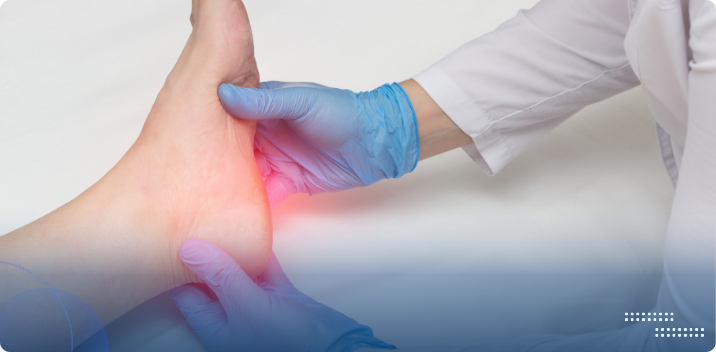
Plantar fasciitis can show up as a sharp stabbing pain in your heel the moment your foot hits the floor each morning, or as a dull ache that builds throughout the day after long periods of standing or walking. You might feel it most intensely with those first steps after sitting, during a morning run, or after a full day on your feet at work.
Many people hope the discomfort will fade on its own, only to find themselves weeks or months later still searching for lasting plantar fasciitis relief while trying to keep up with their job, their family, and the activities they enjoy. When heel pain starts deciding how you get out of bed, walk to the kitchen, or stand through a shift, it is normal to want help that feels steady rather than another quick fix. This guide explains what is happening inside your foot, why symptoms can become long-lasting, and what you can do to get back on your feet with more comfort and confidence.
What Plantar Fasciitis Really Means for Your Body
Plantar fasciitis is not simply a case of sore feet from overuse. The plantar fascia is a thick band of connective tissue that runs along the bottom of your foot, connecting your heel bone to the base of your toes. It acts as a shock absorber and supports the arch of your foot with every step you take. When that tissue becomes overstretched, irritated, or inflamed, it signals distress through pain that can range from a nagging tightness to a sharp, disabling sensation.
Healthy feet allow fluid, pain-free movement because the plantar fascia, the surrounding tendons, and the small intrinsic muscles of the foot work together as a team. When the load on that tissue exceeds what it can comfortably handle, microtears can develop at the point where the fascia attaches to the heel bone. Over time, repeated stress without adequate recovery leads to the chronic inflammation that defines plantar fasciitis.
Symptoms That Suggest Your Foot Needs More Attention
Plantar fasciitis symptoms can vary from person to person, but there are common patterns worth recognizing. You might experience:
-
A sharp or stabbing pain in the heel or arch during your first steps in the morning
-
Pain that eases after walking for a few minutes but returns after prolonged activity
-
Tenderness along the bottom of the foot when pressed
-
Tightness in the Achilles tendon or calf muscles
-
Increased pain after standing for long periods on hard surfaces
-
Discomfort that returns or intensifies after rest following activity
-
Burning or aching along the arch that lingers into the evening or interrupts sleep
Brief bouts of heel pain after a particularly active day are not unusual. When symptoms persist for weeks, begin affecting your sleep, or start limiting the activities you rely on for work or wellbeing, it is worth seeking a thorough evaluation.
At Integra Health in Hawthorne, NY, care for plantar fasciitis starts with understanding your daily demands, your foot mechanics, and the patterns that may be keeping the tissue in a constant state of irritation.
Why One Sore Heel Can Affect Your Whole Body
Plantar fasciitis is rarely contained to a single spot. When your heel and arch hurt, your body quietly adjusts how it moves to protect the painful area. That compensation can create tension and fatigue in muscles and joints that were working fine before.
A painful heel changes your walking pattern and adds stress to your ankles, knees, hips, and lower back. Limping, shortening your stride, or rolling onto the outside of your foot can make you grip with your toes differently, which often leads to calf and shin tension. Over time, what began as one irritated foot can spread into a chain of aches up the leg, because the body moves as a connected system.
Plantar fasciitis is also not always equal on both sides. Some people have much more trouble with one foot, while others notice it in both heels at once. A careful exam helps sort out which structures need the most support, which compensations have crept in, and what kind of care makes sense for your situation.
Why Plantar Fasciitis Becomes Chronic Instead of Fading
Some people can trace the onset of plantar fasciitis to a specific change in their routine, such as starting a new running program, switching to unsupportive footwear, or spending extra hours on their feet during a busy season. Others notice the symptoms gradually without a clear trigger. In both cases, a cycle of stress, incomplete recovery, and re-irritation can keep the tissue from healing properly.
Daily life creates quiet but steady strain on the plantar fascia. Common contributing patterns include spending long hours standing or walking on hard floors, wearing shoes that lack arch support or cushioning, sudden increases in exercise intensity or duration, tight calf muscles and Achilles tendons that place extra tension on the heel attachment, and carrying extra body weight that increases the load on the foot with every step. These patterns can prevent the fascia from getting the recovery time it needs, reinforcing inflammation and pain.
Sometimes structural issues are part of the picture as well. Flat feet or high arches can alter how forces distribute across the foot. Ankle stiffness or abnormal gait mechanics can shift extra stress onto the heel. Poor alignment higher up in the body, including in the knees, hips, or spine, can change how you walk and compound the problem. These factors do not automatically mean surgery is needed, but they do mean that simply resting and hoping for improvement may not be enough.

Common Causes of Plantar Fasciitis
When you know what might be feeding the problem, it is easier to choose the kind of support that leads to more lasting relief instead of chasing good days and bad days. Plantar fasciitis usually develops from a combination of the factors below rather than a single cause.
Overuse and Repetitive Stress
The most familiar path to plantar fasciitis is repeated strain. Running, long walks, prolonged standing, and sudden jumps in activity all put repetitive stress on the fascia. Returning to exercise after a period of inactivity can overwhelm tissue that has not been conditioned for the new demand. Your job, your exercise habits, and how many hours you spend on your feet all play a role, and the pattern tends to show up as sharp pain with the first steps of the morning, discomfort that builds after standing or walking for long stretches, and stiffness that improves with movement but returns after rest.
Biomechanical Issues and Foot Structure
Not all plantar fasciitis comes from overuse. Sometimes the way your foot is built or how it moves creates extra stress on the plantar fascia. Flat feet or fallen arches can strain the tissue, high arches do not absorb shock well, overpronation or rolling inward when you walk shifts the load, and tight Achilles tendons or calf muscles pull on the heel attachment. Obesity increases the mechanical load on the plantar tissue with every step. Biomechanical problems often affect one or both feet and usually show patterns in how your foot strikes the ground, which is why working with a provider who understands foot mechanics can make such a difference.
Footwear and Surface Problems
Sometimes plantar fasciitis develops from wearing shoes without proper support or spending too much time on hard surfaces. Old running shoes, flat dress shoes, or sandals with no arch support can speed up tissue breakdown. Walking or standing on concrete or tile floors all day adds impact that softer surfaces like grass or carpet would absorb.
If you notice deep aching in your heels after work, or the pain is clearly worse in certain shoes, both the footwear and the surfaces you spend your day on deserve a look. Treating only the worst flare-ups often leaves part of the problem unsolved and makes symptoms more likely to return.
Steps That Help Your Foot Feel Safer
Plantar fasciitis often feels less overwhelming once you have a clear set of actions to follow. Small, consistent changes can reduce the daily load on the fascia and give the tissue the environment it needs to recover.
Simple Changes You Can Start at Home
You do not need to overhaul your entire lifestyle overnight. A few targeted habits can make a real difference in how your foot feels day to day:
-
Perform gentle calf stretches and plantar fascia stretches before your first steps each morning and before bed
-
Roll the bottom of your foot over a frozen water bottle for five to ten minutes to reduce inflammation
-
Replace worn footwear with shoes that offer firm arch support, a cushioned heel, and a slightly raised heel to reduce strain on the fascia
-
Avoid walking barefoot on hard surfaces, especially first thing in the morning, and consider supportive slippers or shoe inserts around the house
-
Apply ice to the heel for 15 to 20 minutes after activity to reduce swelling, and use heat before stretching to ease tissue stiffness
-
Transition gradually into new exercise routines rather than increasing intensity or duration too quickly
-
Strengthen the intrinsic foot muscles and lower leg with targeted exercises to take load off the fascia
-
Pace yourself through the day, paying attention to how long you stand or walk and building in rest between demanding stretches
Stretching a little every day is usually better than only stretching when pain flares up. Staying active also matters: the National Institute on Aging's guidance on exercise and physical activity emphasizes that regular, gentle movement helps maintain flexibility and keeps calf muscles loose, which reduces tension on the heel. If any movement causes sharp, worsening pain or swelling, reduce the range or intensity rather than pushing through strong discomfort. Gentle, consistent movement is more effective than forcing progress too quickly.
How Integra Health Builds a Plan Around Your Recovery
When home strategies are not producing meaningful improvement, a guided treatment plan can help you move forward with confidence. At Integra Health, care for plantar fasciitis begins with a thorough evaluation of your foot mechanics, gait patterns, posture, and the physical demands of your daily life. Dr. Noble Thomas and Dr. Ritika Merai take time to understand your history and goals before recommending any treatment, and they watch how your feet and legs move together, including foot structure, ankle mobility, calf flexibility, and walking patterns, to understand which areas need the most support.
Your care plan may include chiropractic adjustments to improve alignment in the foot, ankle, and lower extremity, reducing compensatory stress that keeps the plantar fascia overloaded. Gentle adjustments can also help restore better movement patterns and reduce the compensation that leads to pain in the knees, hips, and back. Shockwave therapy is one of the most effective treatments available for chronic plantar fasciitis, delivering targeted acoustic pulses that stimulate tissue repair and reduce stubborn inflammation at the heel attachment. Deep tissue laser therapy can also accelerate healing by increasing circulation and reducing pain at the cellular level; the research literature on photobiomodulation for musculoskeletal pain is where this approach is studied, and it is typically discussed for cases where inflammation or tissue irritation has lingered for a long time.
Many patients also benefit from a rehabilitative exercise component that builds strength and flexibility in the feet, ankles, and calves. This often includes training for the muscles that support the arch and heel so the plantar fascia is not doing all the work alone, along with stretching for the calf and Achilles tendon to reduce tension on the bottom of the foot.
Massage therapy and soft tissue work can release tight calf muscles and surrounding structures that contribute to excessive tension on the plantar fascia. For patients whose foot and ankle mechanics are a significant part of the problem, custom orthotics may be recommended to improve arch support and distribute pressure more evenly across the foot during walking and standing. In cases where the tissue has sustained significant damage and conservative care alone has not been sufficient, PRP treatments can introduce concentrated healing factors directly into the affected tissue to support regeneration.
The exact mix depends on your history, what caused the problem, your day-to-day demands, and how your body responds over time.

Final Thoughts on Finding Plantar Fasciitis Relief That Lasts
Plantar fasciitis is one of the most common sources of foot pain in active adults, but it does not have to define how you walk, work, or move through your days. Understanding how the condition develops, recognizing the habits that may be prolonging your symptoms, and knowing when to seek professional support can make your next steps feel far more manageable. Small changes at home combined with a thoughtful, individualized care plan often lead to significant reductions in pain and a meaningful return to the activities you love.
If heel and foot pain have been part of your daily experience for longer than you would like, and you are ready for support that looks at the full picture instead of only one sore foot, reach out to Integra Health in Hawthorne, NY, to schedule an appointment and explore a recovery plan built around your body, your goals, and your life.
Ready to take the next step?
Talk with the Integra Health team about a Plantar Fasciitis Care plan built around your goals, in Hawthorne, NY.