
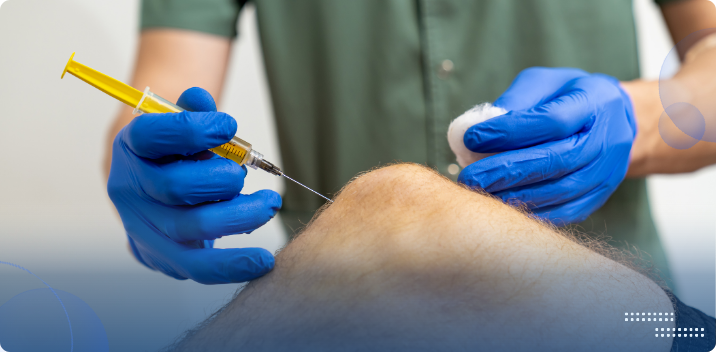
If you are considering PRP therapy in Hawthorne, NY, for knee pain, you are probably looking for a non-surgical option that fits a full schedule and still feels medically grounded.
When your knee is irritated, you start planning around it. You choose the elevator, time your commute to avoid extra walking, and think twice before stairs or workouts. Many people arrive at this point having been told their only choices are steroid injections or, eventually, knee replacement. Then the real question shows up: not just what is wrong, but what you can expect next. Get clear answers on what platelet-rich plasma (PRP) is, how it treats knee pain, how it compares with cortisone, and what you can expect in terms of a treatment timeline.
Understanding PRP Therapy
PRP stands for platelet-rich plasma. It is made from a small sample of your own blood that is processed to concentrate platelets. Platelets help with clotting, but they also release proteins that support tissue signaling and repair. In knee care, this treatment is often discussed as a way to support the body’s natural healing response using your own biology.
Those platelet-derived growth factors are the working ingredient. When concentrated and placed into irritated tissue, they are thought to help calm inflammation, support blood flow to the area, and signal the body to repair worn tissue, including the cartilage that thins in knee osteoarthritis. MedlinePlus covers osteoarthritis as the most common form of arthritis and the condition most often behind the type of knee pain people ask about PRP for. People with mild to moderate osteoarthritis tend to be the most natural candidates; when some cartilage remains, supporting the joint environment may help protect what is left, though results vary and no injection rebuilds a joint on its own.
Why That Matters for Knee Pain
Knee pain often has more than one driver. Even when imaging shows arthritis, symptoms are shaped by inflammation, joint mechanics, and how your nervous system responds to stress in the area. When discomfort stays present, the sympathetic nervous system can remain more active, which increases muscle guarding and changes how you move. Over time, those movement changes can shift load through the knee and nearby joints, keeping the area irritated.
PRP is often used to support the biological side of this pattern. The goal is not short-term numbing. It is to support healthier tissue signaling so rehab, strength work, and daily movement have a better foundation.

PRP vs. Cortisone Shots for Knee Pain
This is one of the most common questions patients bring to a first visit, and the two options work differently.
Cortisone is an anti-inflammatory. It can reduce swelling and pain for a period of time, which is useful for getting through a flare, but it does not repair damaged tissue, and many patients find they need repeat injections every few months as the effect wears off. There is also concern that repeated cortisone injections in the same joint may not be kind to cartilage over time, which is one reason providers tend to limit how often they are given.
PRP is aimed at the repair side rather than suppression. Because it works by supporting tissue signaling, results develop gradually over roughly two to three months rather than within days, and for many people the benefit can hold for a year or longer. Neither option is right for everyone, and the honest answer depends on your diagnosis, how much cartilage remains, and what you need the knee to do. A good provider will walk through both rather than default to one.
How Long PRP Takes to Work for Knee Pain
Results vary based on your diagnosis, tissue health, activity level, and how long symptoms have been present. Many people notice change in phases, not all at once.
The First Few Days
It is common to feel soreness, tightness, or a flare in the knee after an injection. That doesn’t always mean something went wrong. PRP can trigger a short-term inflammatory response that is part of the process.
This is also the period where smart pacing matters. You can usually walk out of the office and go about normal daily activity, but it is wise to avoid strenuous exercise, intensive gym sessions, and long walking days for roughly the first 48 hours. If you try to test the knee too soon, it can feel worse, even if the plan is still on track.
When Early Changes May Show Up
Many people notice the first functional shifts within about two to three weeks. Some people notice that stairs feel less sharp, the knee warms up faster after sitting, or swelling settles more predictably after a long day.
Progress here is usually practical, not dramatic. Small gains matter because they help you move with less guarding, which supports better mechanics and steadier loading.
When Improvements May Feel More Consistent
The effects of the injection are not immediate; instead, patients should expect results to develop progressively over a period of time, with the fullest improvement often showing up around the eight to twelve week mark. This is the stage where improvements may feel more stable, especially when platelet-rich plasma care is paired with rehab, strength work, and better movement patterns.
Some care plans include a series of injections rather than one. The right number depends on the clinical picture and your response.
Why Platelet Concentration Matters
Not all PRP is the same, and this is worth understanding before you choose a provider. Normal blood contains roughly 150,000 to 400,000 platelets per microliter. The point of processing your blood is to concentrate those platelets well above that baseline in the final injectable, because a preparation that is barely more concentrated than whole blood is unlikely to deliver the signaling effect the treatment depends on.
It is reasonable to ask any clinic how their preparation is processed and what they do to make sure it is concentrated enough, rather than assuming the centrifuge produced an adequate result. A weak preparation tends to produce weak results, so this is a fair question to put to any provider before you book.
What to Expect at Integra Health in Hawthorne
Your provider should review your symptom timeline, prior imaging if available, and what triggers pain. A careful exam often includes range of motion, joint loading, and movement patterns that change stress on the knee.
This matters because knee pain is often tied to what is happening above and below the joint. Hip strength, ankle mobility, and gait mechanics can all affect how the knee feels.
Integra Health also offers services that can support a broader plan , such as chiropractic care, massage therapy, deep tissue laser, shockwave therapy, and spinal decompression therapy when appropriate to the patient’s needs. The aim is to create a cohesive strategy, not just a selection of disconnected choices. You can read more about how PRP treatments fit into that model, and about the team at Integra Health, before your first visit.
Easy Access From Nearby Towns and Commute Routes
Integra Health is located at 153 Broadway, Suite 1, Hawthorne, NY , right along Broadway. This can be an easy stop if you are coming down Route 9A from Pleasantville, heading over from Valhalla, or traveling through Thornwood and Mount Pleasant on your way home. Many patients also find it convenient when they are moving between work in White Plains and errands in the surrounding area.
Before, During, and After a PRP Injection for the Knee
PRP sounds intimidating until you see how structured it usually is. The process is typically straightforward, but the details around it can affect comfort and outcomes.
Before
A good pre-visit conversation covers medical history, current symptoms, and medication use. Your provider may discuss factors that influence inflammation and healing, since those can affect how your knee responds.
Wear comfortable clothing and plan for a calm day. Many people do best when they are not rushing from the appointment into a long meeting or a high-intensity workout.
During
Most PRP visits involve three steps: a blood draw, processing the blood to concentrate platelets, and then placing the PRP into the target area. The visit itself is often completed in under an hour.
Clinics vary in technique and guidance methods. Some use imaging guidance for precision, while others use anatomical landmarks based on the exam. The key is that the plan is clear, and the procedure is done with attention to safety and sterile technique.
After
Expect the knee to feel tender or “worked” for a short period. Many patients describe a deep ache rather than sharp pain. This is also the time when you want a plan for activity.
Most people return to daily responsibilities quickly, but heavier training may need to be modified for a window of time. A smart progression often includes mobility, stability, and controlled strength work as the knee calms and function improves.
If you want a simple way to think about it, platelet-rich plasma is the biological piece. Rehab is the mechanical piece. The best outcomes usually occur when both are handled with intent.
Questions Worth Asking Any PRP Provider
The quality of a PRP treatment depends heavily on provider experience and technique, so it is worth asking a few direct questions before you book:
-
How do you confirm the platelet concentration of the preparation before injecting it?
-
How do you guide needle placement, and why did you choose that method?
-
How many knee cases like mine have you treated, and what did their timelines look like?
-
Will the same team manage my care from consultation through follow-up?
That last point matters more than it sounds. In large hospital systems you may see a different provider at each visit. At Integra Health, the same experienced team follows your case from the first evaluation through every follow-up, which makes it easier to judge whether the plan is working and adjust it when needed.

Conclusion
Platelet-rich plasma can be a practical option for adults who want non-surgical support for knee pain and prefer a plan that makes sense medically and functionally. The timeline is usually measured in weeks, not hours, and progress often shows up as better movement, steadier swelling patterns, and fewer pain-driven interruptions.
If you are exploring PRP therapy in Hawthorne, NY , Integra Health can help you understand whether it fits your knee and your goals. When you are ready to take the next step, schedule an appointment to get a focused evaluation and a plan you can follow.
Ready to take the next step?
Talk with the Integra Health team about a PRP Treatments plan built around your goals, in Hawthorne, NY.