
Heel pain can turn basic movement into a daily calculation. If you are looking for plantar fasciitis relief in Hawthorne, NY , the goal is usually simple: walk with confidence again, without having to plan your day around foot discomfort or worry about that sharp first-step sensation.
This problem tends to linger because it’s more than irritated tissue. Load, foot mechanics, and pain signaling can reinforce each other, especially when you start compensating without realizing it. The most effective plans focus on calming the cycle, then rebuilding tolerance so your foot can handle real life again. Shockwave therapy is easiest to judge when you stop asking whether it is working in the abstract and start tracking what your body can tolerate from week to week.
Why Plantar Fasciitis Becomes Hard to Ignore
The plantar fascia is a thick band of tissue that supports your arch and helps transfer force as you walk. When it gets overloaded, the heel can feel tight, hot, or like it’s bruised.
Many people try to push through. Then the nervous system adapts.
When pain stays present, the sympathetic nervous system can stay more alert. That increases muscle guarding and changes how you load your foot. You might shorten your stride, avoid pushing off, or shift weight to the outside edge of the foot. Stress and poor sleep can add fuel here: your system stays on alert, and small inputs feel bigger than the tissue itself would suggest.
Those changes can create a physiological feedback cycle in which irritation drives compensation, compensation changes mechanics, and mechanics keep stressing the same spot.
It Is Often About Load Tolerance, Not Just Inflammation
Many people hear plantar fasciitis and assume the main issue is swelling. In real life, the bigger issue is frequently tolerance. The plantar fascia has to manage force with every step, and when that capacity drops, everyday movement can feel like too much.
You can also see why rest alone is not always enough. If you unload completely, the area may calm down, but it can also lose conditioning. A weekend off may settle symptoms, but the first long walk, commute, or workout brings the same pattern back. The goal is to restore what the tissue can handle, not only to quiet it for a few days.
Does Shockwave Therapy Help Stubborn Plantar Fasciitis?
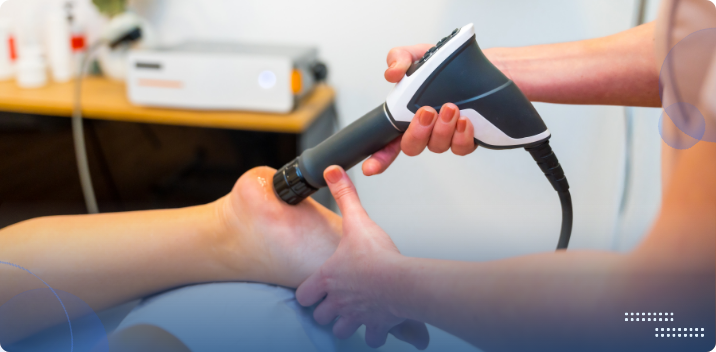
Shockwave therapy is a non-invasive option that uses acoustic waves delivered to the painful area to activate the body’s natural healing processes. Integra Health uses specialized equipment to target pain points precisely, with the aim of supporting tissue repair and reducing inflammation.
In plantar fasciitis, the reason behind the pain matters. Foot discomfort often lingers because the tissue is not tolerating load well. You need a signal that supports repair, plus a plan that restores better mechanics.

The Science Behind Shockwave for Heel Pain Relief
Shockwave is sometimes framed as a quick, one-and-done answer. In reality, it tends to work best when it is part of a structured plan. In plain terms, shockwave uses controlled mechanical energy to give the irritated tissue a strong, targeted signal so your body can shift how it responds to load. That process can involve local circulation changes and tissue signaling that encourages remodeling over time.
Here is what matters most:
-
It targets the local stress zone. Shockwave is applied where the fascia and surrounding tissue are irritated. The goal is to stimulate a healing response in the area that has been stuck.
-
It supports circulation and repair signals. Integra Health describes shockwave as promoting natural healing, reducing inflammation, and helping restore mobility.
-
It can reduce pain sensitivity over time. When a region stays irritated, the brain can treat it as high-risk and amplify signals. Calming that response helps you move more normally, which is part of long-term change.
This is also why it’s not only about the heel. Your arch support, calf mobility, ankle motion, and walking pattern all influence how much strain hits the plantar fascia. The plantar fascia tends to improve when the signal and the loading plan match, which is why care should be paired with smart activity rather than delivered in isolation. At Integra Health, many patients consider shockwave therapy as one part of a broader approach that may also include chiropractic care, soft tissue work, and gait correction when those services fit the exam. If your symptoms are tied to stress and guarding, the nervous system side matters too, because autonomic tone can influence how quickly the area calms down between sessions.
A Practical Progress Framework for Plantar Fasciitis
Progress with plantar fasciitis is usually gradual. Many patients notice functional improvements first, rather than one dramatic change. A smart recovery rarely feels like a straight line. It looks like fewer flare-ups, a calmer next-day response, and more confidence with normal movement. The goal is not perfect comfort overnight. The goal is a measurable trend you can trust.
Phase 1: Establish Your Baseline
Your provider should map out what triggers symptoms, what relieves them, and how your foot behaves during basic movement. The goal is clarity: what is driving overload, and what needs to change first.
The Most Useful Metric Is the 24-Hour Response
A smart plan tracks what happens during activity and what happens the next day. Pain that spikes during a task but settles quickly is different from pain that lingers and stiffens overnight.
Try watching one variable for a week. Pick a consistent walk, a consistent morning routine, or a consistent work shift, and pay attention to what changes within 24 hours. That trend tells you more than any single moment, and it gives you and your provider a shared reference point at each checkpoint.
Phase 2: Early Changes You Can Measure
Early progress often looks like:
-
Less sharp discomfort during the first steps in the morning.
-
Fewer flare-ups after long periods of standing or errands.
-
A smoother push-off while walking.
You may still have sensitive days. That doesn’t mean it’s not working. It often means the tissue is still rebuilding tolerance.
Some people notice temporary soreness after a session, especially if the area is very sensitive at baseline. This is usually short-lived and tends to ease within a few days. Early on, the area may feel different rather than better, and the key is what happens with daily life: if the next-day response is getting calmer, that is a useful sign. At this stage, avoid chasing pain. Keep activity consistent and controlled, because a wild swing in walking volume or intensity can blur the signal.
Phase 3: Building Load Tolerance
This is where the condition often starts to feel less persistent. If progress is on track, you may notice:
-
You can walk longer before symptoms show up.
-
The foot settles faster after activity.
-
You move more naturally on stairs or sloped sidewalks.
-
A shorter warm-up time before your gait feels smooth.
-
Better tolerance for the same distance with less compensation.
Many care plans use a short series of sessions rather than a single visit. The exact number and spacing can vary based on your symptoms, tolerance, and how your foot responds over time.
What a Reasonable Checkpoint Window Looks Like
Recovery decisions rarely come down to a single visit. Shockwave therapy for plantar fasciitis makes more sense when you judge it as a short, structured trial and ask one practical question: is the trend improving by roughly weeks 3 to 6? In the first week or two the signal is new and your body is testing it. By weeks 3 to 4, capacity often starts to show up in normal tasks and the symptom pattern becomes less reactive, which makes decisions clearer. By weeks 5 to 6 the goal is stronger tolerance with less fallout: you may still feel some sensitivity with higher loads, but the bounce-back should be quicker and more predictable. The best signal is fewer rough days in your week, not a flawless day every day.
If the pattern has not moved by that point, that is useful information rather than a failure. It can suggest the main driver is not what it seemed, the loading strategy needs a reset, or another factor is keeping the system on edge. A set reassessment window is what turns that into a decision instead of a guess.
What Helps Results Hold Between Visits
Shockwave can be a strong tool, but your daily decisions still matter.
Practical supports include:
-
Avoiding sudden spikes in steps or running volume.
-
Wearing consistent support for longer standing days.
-
Gentle calf and foot mobility that does not provoke sharp pain.
-
Simple strength work that improves how your foot handles load.
The goal is not to overprotect the foot. It is to build capacity without re-irritating the same tissue day after day.
The Local Connection: Why Hawthorne Professionals Choose Integra Health
Heel pain is a productivity problem. It affects commuting, office movement, and the small daily tasks that keep your schedule running. Many patients in this part of Westchester are navigating weeks built around Metro-North platforms, long stretches on concrete, uneven pavement, and jobs that keep them on their feet. Add a commute with multiple transfers and you get the same story: less time for recovery, more repeated stress. Consistency becomes the real challenge, and care only works if it fits your schedule.
Integra Health is located at 153 Broadway, Suite 1, Hawthorne, NY 10532, a practical stop if you are coming from Valhalla, Pleasantville, or driving along the Saw Mill River Parkway corridor.
It also fits real-world goals. If you want to get back to comfortable walking around the Kensico Dam Plaza area, or you simply want errands on Broadway to feel normal again, you need a plan that matches your timeline, not just your diagnosis. Local context also shapes what you can track: walking tolerance, morning stiffness, and next-day soreness after a full shift are real metrics for busy adults, and those markers make the plan feel grounded rather than theoretical.
What to Expect During a Visit
A good experience should feel organized and clear.
You will start with a focused review of your symptom timeline, what makes the pain better or worse, and how your foot responds during everyday movements. Your provider may look at how you walk, how your ankle moves, and whether tightness in the calf or changes in arch support are adding extra strain to the plantar fascia. The exam also considers how the foot and ankle share stress under load, and whether anything in the pattern suggests a need for additional medical evaluation before conservative care moves forward.
If shockwave therapy is part of your plan, the session itself is straightforward and non-invasive, with minimal downtime. The goal is to support the healing response in the irritated area while you work on the mechanics that keep the tissue overloaded. Progress should be tied to clear checkpoints and a set reassessment window, using measures such as morning stiffness, pain during a standard walk, and the 24-hour response after activity.
You should leave with a practical next-step plan, including simple guidance to help you reduce flare-ups, rebuild load tolerance, and return to walking more comfortably. Home steps usually focus on pacing, mobility, and controlled strengthening so the tissue can rebuild capacity between visits.

Conclusion
Plantar fasciitis can feel personal because it interrupts basic movement. When every walk becomes a calculation, your body starts to compensate, and the cycle gets louder. Smart recovery is not about piling on more work. It is about choosing the right inputs, matching them to the pattern, and tracking how the tissue responds over time so decisions get simpler and confidence builds.
Shockwave therapy may help reduce pain sensitivity and support healthier tissue remodeling, especially when it is paired with guidance that improves how your foot handles load. If you want plantar fasciitis relief in Hawthorne, NY, the next step is a focused evaluation and a plan that fits your schedule.
When you are ready, schedule an appointment at Integra Health to get clear on what is driving your symptoms and how to move forward.
Ready to take the next step?
Talk with the Integra Health team about a Shockwave Therapy plan built around your goals, in Hawthorne, NY.